PCBSync Engineering Tools logo Immersion Tin PCB
PCBSync Engineering Tools

IPC-4554 · White Tin (β-Sn) Surface Finish

Immersion
Tin PCB

A flat, lead-free, solderable white tin deposit over copper — the finish engineers reach for on press-fit backplanes and fine-pitch, cost-sensitive boards. This guide is part of the Immersion Tin PCB resources by PCBSync: what ImSn is, why it works, when to spec it, and when to walk away.

FREE REFERENCE + 3 INTERACTIVE TOOLS · NO SIGN-UP

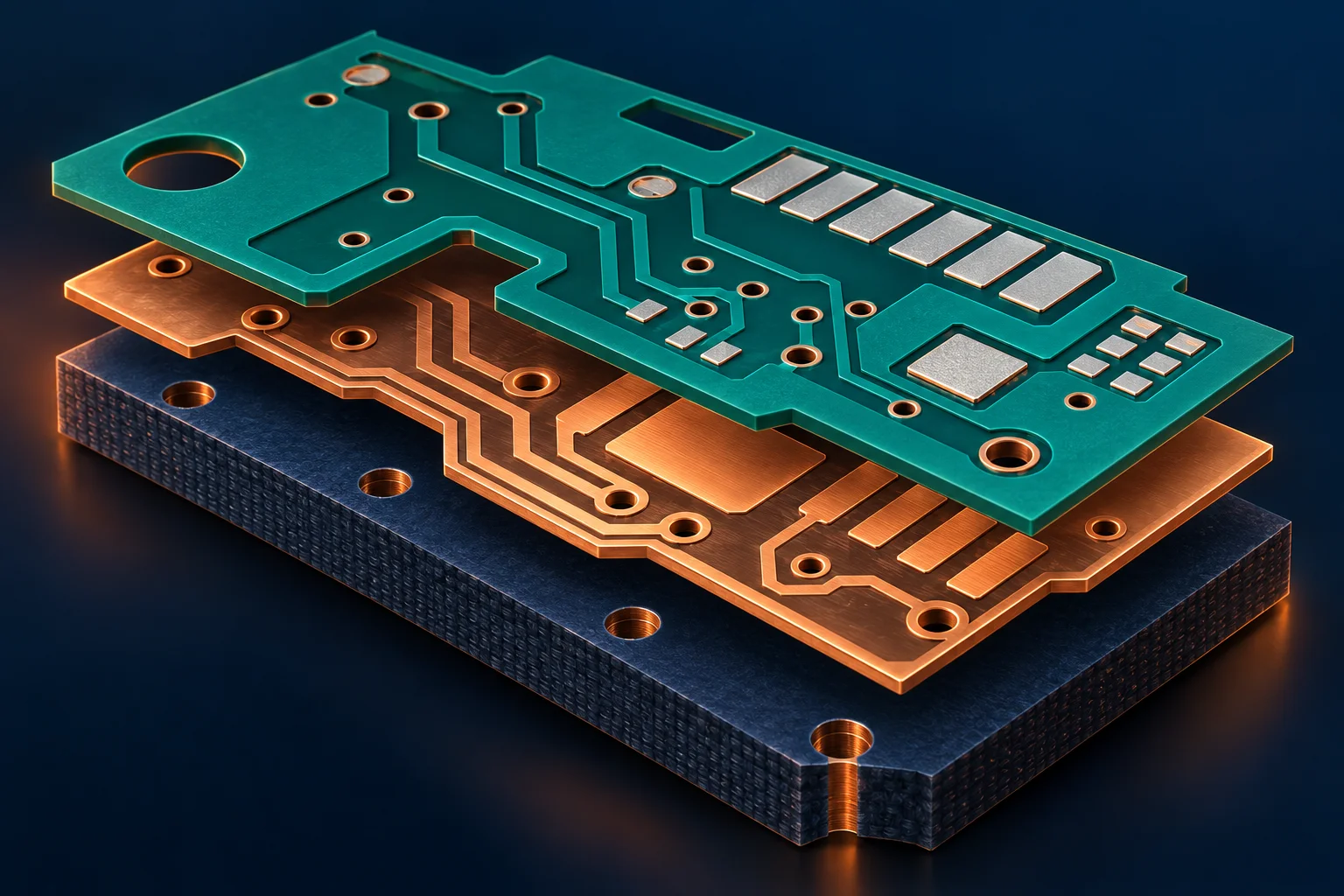
Immersion tin PCB with deep blue solder mask and flat white tin (ImSn) plated pads, connectors and test points
SPECIMEN · ImSn over Cu Finish: white tin ≥ 1.0 µm

Fundamentals

What is immersion tin (white tin)?

Immersion tin (ImSn) is a chemical displacement finish: the bare copper of a finished PCB is immersed in a tin-salt solution, and copper atoms at the surface exchange with tin ions until a thin, uniform layer of pure tin covers every exposed feature. No electricity, no nickel barrier — just tin directly on copper.

The deposit is matte, silvery-white and dead flat, which is why the industry nicknamed it “white tin.” (Metallurgists will note the deposited phase is β-tin — literally the allotrope called white tin.) Because it is a displacement reaction, the process is self-limiting: production deposits land at roughly 1.0–1.2 µm, and IPC-4554 sets the floor at 1.0 µm.

One behavior defines everything about how you use this finish: tin and copper interdiffuse from day one, growing a Cu₆Sn₅ intermetallic (IMC) layer that slowly consumes the solderable free tin. Storage time, temperature and reflow cycles all spend that budget. Drag the slider to see why shelf life — not solderability on day one — is the real design constraint.

Pad cross-section

Interactive · IMC growth model
Free tin (β-Sn, white tin)1.05 µm
Cu₆Sn₅ intermetallic0.15 µm
Copper pad~35 µm · not to scale
FR-4 laminate

Free tin ≈ 0.95 µm — fresh finish, excellent solderability.

Illustrative diffusion model at ambient storage. Actual IMC growth depends on temperature, humidity and packaging — always confirm windows with your fabricator.

Decision Guide

Why engineers spec immersion tin

Six properties carry almost every ImSn decision. If your board needs the first two, immersion tin is usually the short answer.

Coplanarity

Dead-flat pads

A chemical deposit follows the copper perfectly — no HASL solder dome. Ideal for fine-pitch QFP, 0.4 mm BGA and large LGA pads where coplanarity drives yield.

Mechanical

Best-in-class for press-fit

Soft, uniform tin in the barrel makes a gas-tight cold weld with compliant pins. ImSn is the industry-preferred finish for press-fit backplanes and automotive connectors.

Cost

Flat finish, not flat-finish price

No gold, no nickel, fewer process steps. ImSn delivers ENIG-class flatness at a fraction of the cost — typically the cheapest flat lead-free option after OSP.

Assembly

Direct Sn–Cu soldering

The joint forms tin-to-tin with SAC alloys: excellent wetting, no nickel layer in the joint, and zero risk of ENIG-style black pad. Friendly to wave, reflow and selective solder.

Compliance

Lead-free & RoHS native

Pure tin, no lead anywhere in the stack. Drop-in compatible with lead-free profiles and halogen-free laminates — no exemptions to document.

Uniformity

Self-limiting thickness

The displacement reaction throttles itself, so thickness is consistent across pads, vias and barrels — predictable for paste-stencil design and ICT probing.

Use immersion tin when…

  • Press-fit connectors dominate the design (backplanes, automotive, telecom).
  • You need a flat finish for fine pitch but ENIG breaks the budget.
  • The board will be assembled within ~6 months of fabrication.
  • You run a lead-free SAC process and want simple Sn–Cu metallurgy.
  • You want to eliminate black pad risk entirely.
  • Multilayer boards need uniform coverage in via barrels for ICT.

Avoid or re-evaluate when…

  • Boards may sit in storage longer than 6–12 months before assembly.
  • The process needs 3+ reflow cycles or heavy rework.
  • You require aluminum wire bonding — go ENIG / ENEPIG.
  • Pads double as switch contacts or connector fingers (use hard gold).
  • A strict tin-whisker policy (space / military) rules out pure tin.
  • Operating or storage spec drops below 13 °C for long periods — tin-pest review.

Engineering Tools

Decide in minutes, not meetings

Three quick tools built around IPC-4554 and common fab guidance. They run entirely in your browser — nothing is uploaded.

Tool 01

Surface finish selector

Answer six questions about the design. Get a straight recommendation.

1 · Press-fit connectors on the board?

2 · Stored > 6 months before assembly?

3 · Fine pitch ≤ 0.5 mm / flatness critical?

4 · Aluminum wire bonding required?

5 · More than 2 reflow / rework cycles?

6 · Cost pressure vs ENIG?

Tool 02

IPC-4554 thickness checker

Paste the Sn thickness from your fab's XRF report and check it against spec.

Tool 03

Shelf-life calculator

How much solderability window is left on boards already in stock?

Comparison

Immersion tin vs ENIG, HASL, ImAg & OSP

Where white tin actually sits among the common lead-free finishes — strengths and trade-offs, no marketing.

General industry guidance per IPC-4554 and fabricator datasheets. Confirm limits with your supplier for production.
Finish Coplanarity Shelf life Reflow cycles Press-fit Wire bond Relative cost
Immersion Tin (ImSn) Excellent 6 mo · 12 sealed 1–2 Preferred No $
ENIG Excellent 12 mo + 3 + Acceptable Yes (Al) $$$
HASL (lead-free) Poor–fair 12 mo + 3 + Not recommended No $
Immersion Silver (ImAg) Excellent 6–12 mo (tarnish) 2–3 Acceptable Limited $$
OSP Excellent 6 mo 1–2 No No $

DFM Rules

Immersion tin design & handling rules

Six habits that keep white tin boards solderable from fab dock to reflow oven.

Rule 01 · Procurement

Buy against IPC-4554

Call out “Immersion tin per IPC-4554, ≥ 1.0 µm” on the fab drawing and request XRF thickness data with each lot. Thickness below 1.0 µm eats straight into your storage window.

Rule 02 · Logistics

Schedule fab close to assembly

Treat ImSn boards like fresh stock: vacuum-sealed with desiccant, FIFO rotation, assembled inside 6 months (12 sealed). Date-code every bag at receiving.

Rule 03 · Thermal budget

Don't pre-bake white tin

Baking accelerates Cu–Sn intermetallic growth and spends solderability you can't get back. If moisture is a concern, fix it with packaging and scheduling, not the oven.

Rule 04 · Handling

Gloves on, always

Fingerprint salts etch matte tin and show up as dewets after reflow. Use nitrile gloves and edge handling from unbagging through inspection.

Rule 05 · Assembly

Plan the reflow count

Budget 1–2 lead-free cycles. For double-sided boards, sequence so the critical fine-pitch side sees the final reflow, and qualify any rework procedure separately.

Rule 06 · Press-fit

Spec the barrel, not just the pad

For press-fit, control finished hole size and Sn coverage in the barrel per your connector datasheet — uniform barrel tin is exactly why ImSn wins this application.

FAQ

Immersion tin PCB — quick answers

IPC-4554 sets a minimum immersion tin thickness of 1.0 µm (≈ 39.4 µin). Typical production deposits run 1.0–1.2 µm so enough free tin remains above the Cu–Sn intermetallic for reliable soldering after storage.

Two reasons: the finish looks uniformly matte silvery-white, and the deposited phase is β-tin — the allotrope metallurgists literally call white tin (versus α-tin, “gray tin”). The shop-floor nickname matched the metallurgy and stuck.

Plan on about 6 months from fabrication in ambient conditions; vacuum-sealed packaging with desiccant stretches many fabricators' guidance toward 12 months. The clock is driven by Cu₆Sn₅ intermetallic growth consuming free tin — heat shortens it, good packaging extends it.

Less than with thick electroplated tin: immersion deposits are thin and modern chemistries add organics that lower film stress. High-reliability programs (space, defense, implantables) should still apply their whisker-mitigation policy — conformal coating or an alternative finish such as ENIG may be mandated.

Both are flat and fine-pitch friendly. Pick immersion tin for press-fit connectors, lower cost, simple Sn–Cu joints and zero black-pad risk. Pick ENIG for long storage, 3+ reflows, aluminum wire bonding, or pads that double as contact surfaces.

Typically 1–2 lead-free cycles. Every thermal excursion grows intermetallic and consumes free tin, so sequence double-sided assembly deliberately and confirm rework allowances with your fabricator.

Yes — it's pure tin with no lead in the stack, fully RoHS-compliant and designed for SAC-alloy lead-free assembly. It's one of the standard lead-free replacements for SnPb HASL.