Immersion Tin PCB: Engineering the Surface
An immersion tin PCB uses a thin tin finish over exposed copper features. The finish protects those features before assembly and provides a solderable surface. Selecting it well means considering the board, storage conditions and complete assembly sequence together.
What the finish does
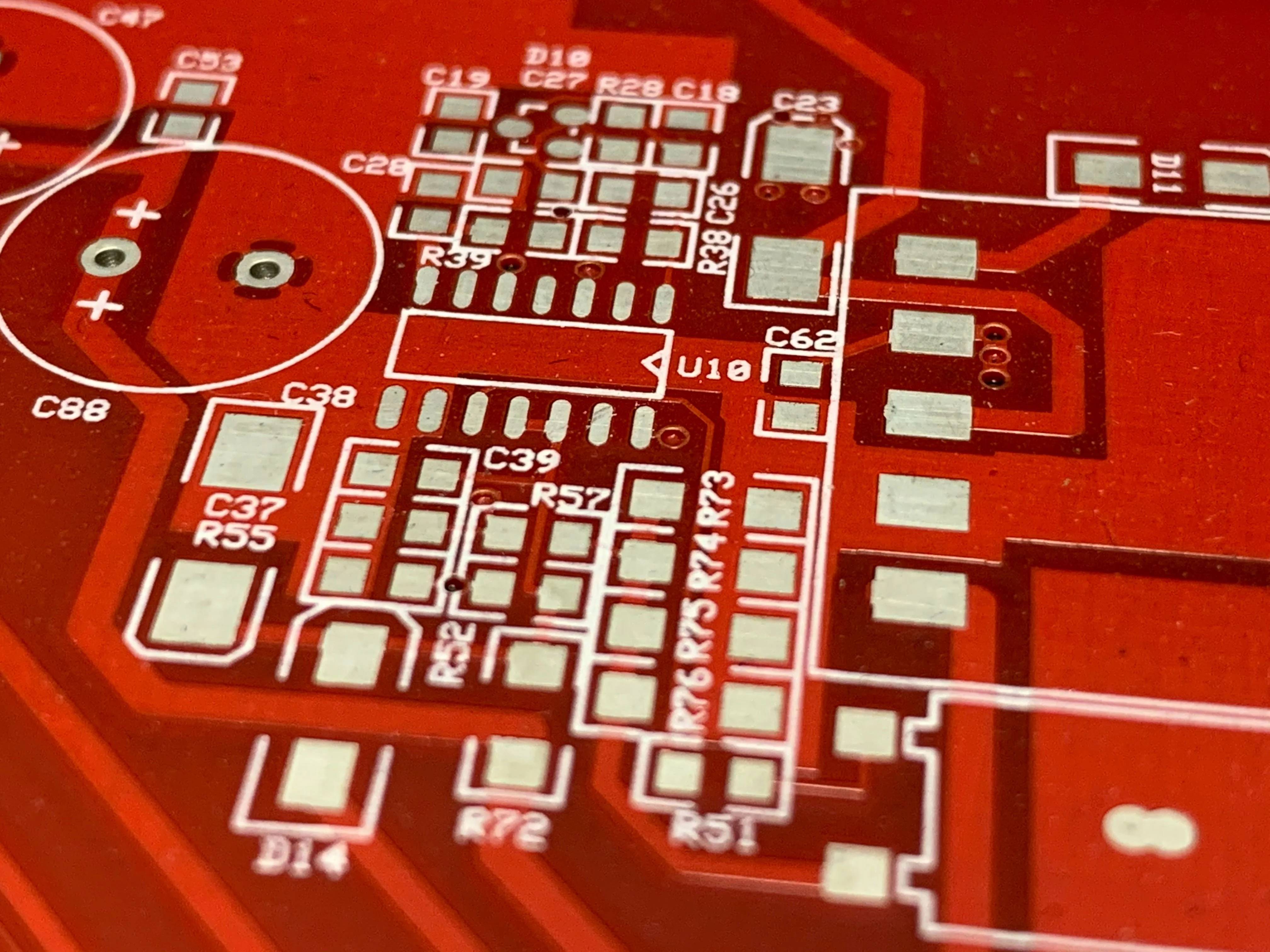
Immersion tin is a chemical surface finishing process. It is different from a layer of solder applied by hot air solder leveling, and it is different from the colored solder mask covering the rest of the board. The term white tin PCB usually describes this tin finish; it does not specify white solder mask.
The thin deposit follows the underlying copper surface. Its flatness can be useful when printing solder paste on small lands, but it cannot correct a poorly defined copper pad, unsuitable stencil aperture or warped board. The finish is one element of an assembly process, not a guarantee of yield.
A purchase specification should identify the finish explicitly. A photograph of a silver-colored pad cannot establish whether the metal is tin, silver, solder or another finish. Use manufacturing records and agreed inspection evidence when identifying an unknown board.
Plan around the entire assembly sequence
Tell the fabricator how many thermal excursions the board will experience, including both sides of assembly and anticipated rework. Solderability at delivery does not prove performance after an unspecified storage period or repeated heating. Copper and tin interact, so qualification should reflect the time and temperature history the product will actually see.
Record the expected interval between fabrication, receipt, package opening and soldering. Ask for the supplier’s written packaging and handling instructions. Gloves, clean handling and controlled storage help preserve a solderable surface. Avoid unnecessary contact with exposed lands. If a package is compromised, isolate it and seek disposition rather than assuming that a generic bake restores the finish.
For press-fit hardware, the connector supplier’s approved board finish, hole geometry and qualification requirements are decisive. For sliding or frequently mated contacts, a solderable tin finish should not automatically be treated as a wear-resistant contact system. Review these features separately.
Compare finishes against the requirement
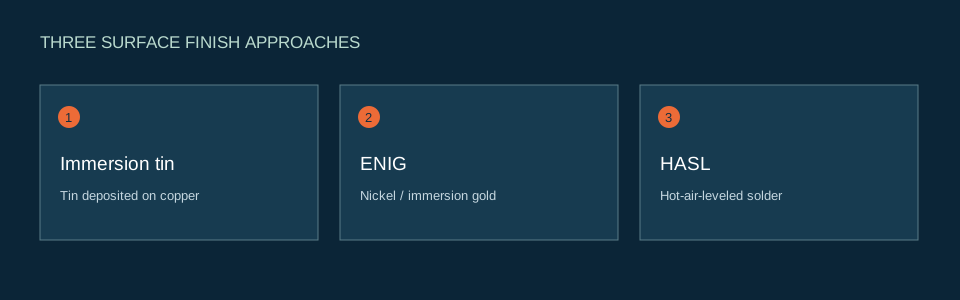
Immersion tin, immersion silver, OSP, HASL and ENIG have different process and assembly considerations. Price alone is an incomplete comparison. Include flatness, storage exposure, thermal history, connector requirements and the cost of qualification in the decision. A gold-colored surface is not automatically the best option for every circuit.
Use the homepage finish comparison as an initial discussion aid. Then document the conditions behind the selection. A useful comparison includes the same board design, identical assembly assumptions, the required inspection evidence and a clear response to each exception. Avoid comparing an unspecified low-price quote with a fully qualified production proposal.
Specify evidence before ordering
State the agreed standard and revision, applicable product class, any customer-specific requirements and the acceptance method. Our quality and standards guide explains how to separate a standards reference from an actual supplier claim. Do not infer certification from a website’s use of an IPC document name.
Request traceability between the fabrication lot, finish inspection and shipment. Agree where measurements are made and how solderability will be assessed. A numerical result without its measurement method or sampling location may be difficult to interpret. Resolve deviations before production rather than after boards reach assembly.
Ready to evaluate a particular board? Send your requirements for a technical review. Include your stackup, quantity, assembly sequence and delivery target. Drawings are optional for an initial inquiry; identify which details remain provisional.
Apply this to your PCB project
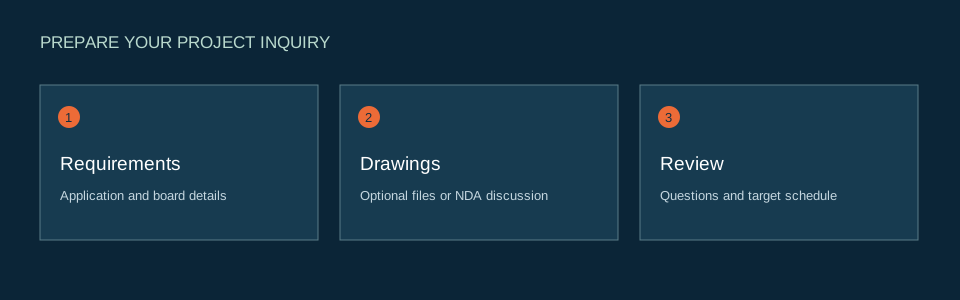
Share your design constraints, assembly sequence and finish questions. Drawings are optional.
Request a technical review ↗