Immersion Tin Quality and IPC Standards
Quality is demonstrated by a defined requirement and relevant evidence. A standards acronym, attractive board photo or isolated measurement does not establish product compliance.
Agree the standard and its edition
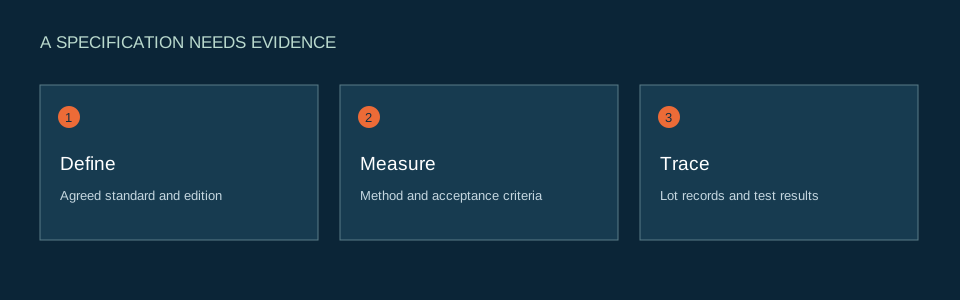
IPC-4554 addresses immersion tin finishes for printed boards. The edition, amendments and contractual applicability should be agreed with the supplier. Check the current IPC document status rather than assuming a document number identifies a newly maintained revision.
Finish requirements operate alongside the applicable bare-board, solderability and customer specifications. They do not replace a product-level qualification plan. Identify the product class and any exceptions explicitly, and determine which document takes precedence if requirements differ.
This site provides engineering guidance; it does not claim IPC certification, laboratory accreditation or compliance of an individual production lot. Consult the IPC-4554 scope and IPC revision table when establishing the governing documents. Access to a table of contents is not a substitute for the full applicable standard.
Make inspection results interpretable
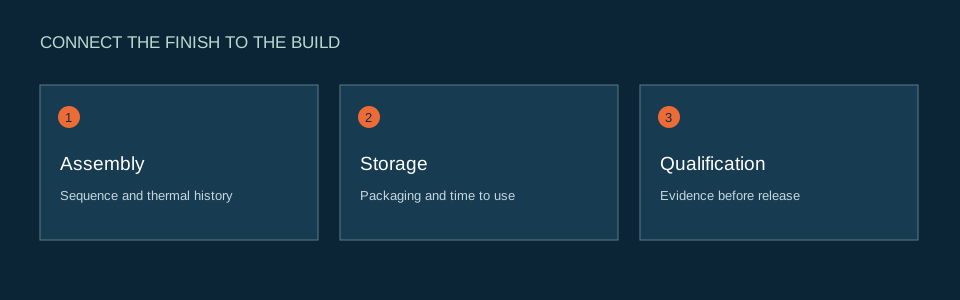
Agree the measurement method, sampling locations and acceptance criteria before production. Ask whether the reported property is the one required by the specification. A finish measurement should be traceable to a location and lot, rather than appearing as an unexplained number on a generic certificate.
Solderability evaluation should reflect the agreed conditioning and test method. A successful result on a fresh sample does not automatically establish an unlimited storage life or performance through every assembly process. Keep fabrication date, packaging history and relevant thermal exposure available for investigation.
For discrepancies, preserve the affected boards and packaging and record the observed condition. Avoid cleaning, baking or reworking samples before agreeing an investigation plan, because those actions can change the evidence. Separate cosmetic observations from functional acceptance decisions.
Keep requirements connected to the board
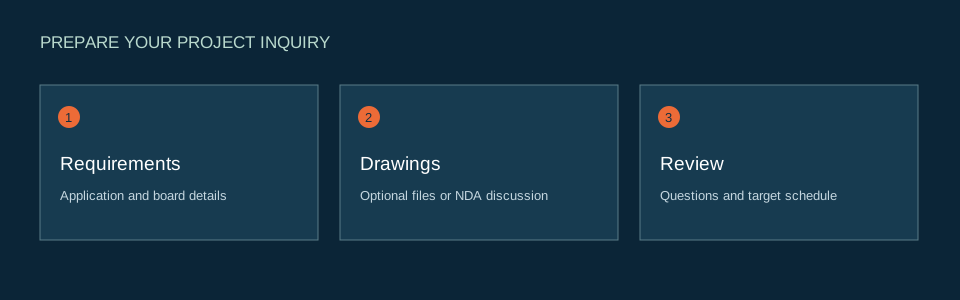
A useful review package includes the fabrication drawing, stackup, finish note, assembly sequence and intended delivery schedule. Identify any customer-mandated process restrictions and whether substitutions require written approval. Use lot identifiers to connect inspection, shipment and assembly records.
Read the immersion tin overview for selection considerations and the application guide for questions about connectors and service conditions. Request a project review when a drawing note or acceptance requirement needs clarification.
Apply this to your PCB project
Share your design constraints, assembly sequence and finish questions. Drawings are optional.
Request a technical review ↗